
The 1:1 Is Still the Most Important Meeting
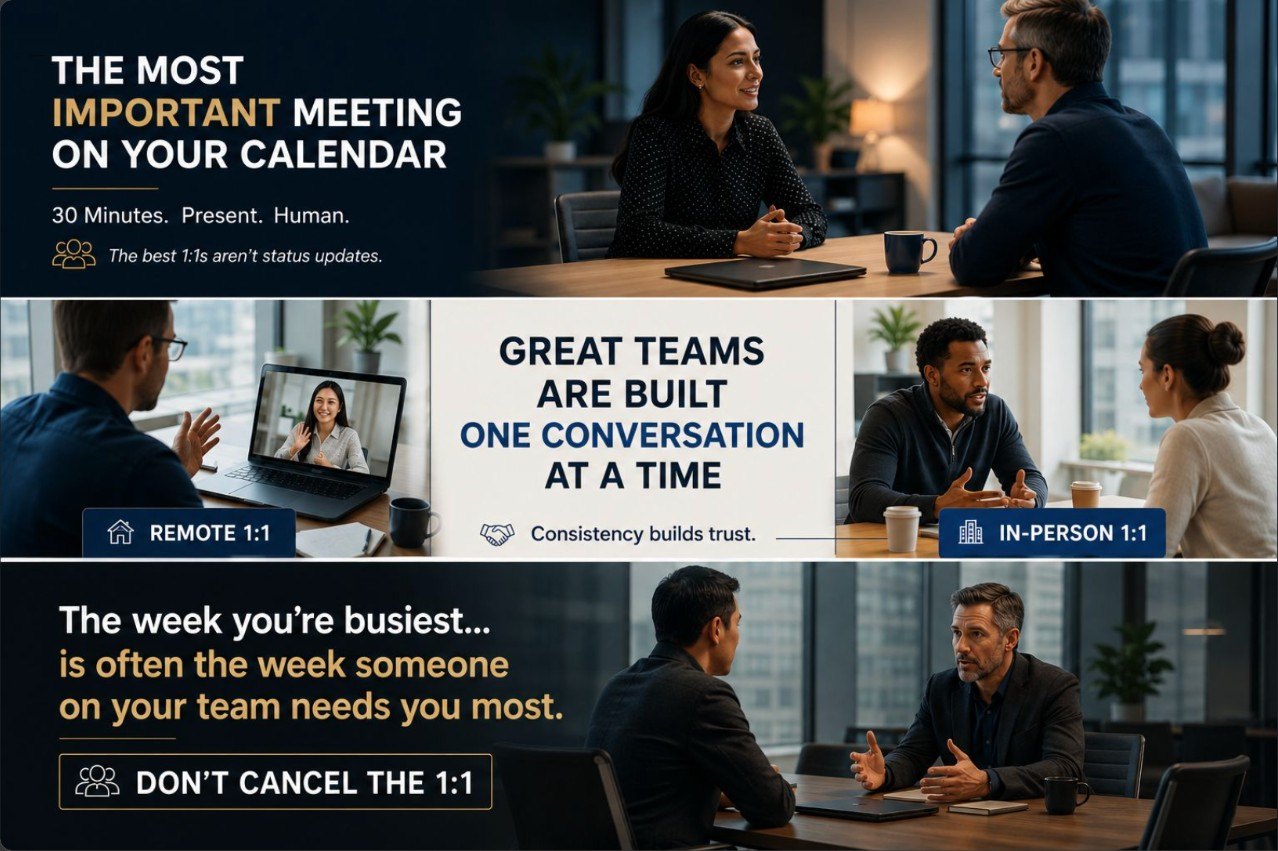
The week everything feels urgent is usually the week someone on your team needs you most.
In a remote and hybrid world, the 1:1 is still the most important meeting on any manager’s calendar. One rule matters more than the rest: protect it. Not when things get busy. Not when the calendar fills up. If rescheduling is unavoidable, agree a new time promptly.
Most managers run 1:1s the wrong way. They arrive with a task list, spend the whole time on execution and leave without knowing how the person is actually doing. That is a status update, not a 1:1.
Weekly or every two weeks works. Monthly is too far apart to build trust. There is also a pattern worth watching: the longer someone has been in the role, the less often they get a 1:1. Managers assume tenure means stability and only reconnect at the performance review. Long-tenured employees still need direction, recognition and connection. They simply stop asking for it.
A real 1:1 is where the real conversations happen. It answers questions like these:
- Are they motivated, or quietly checking out?
- Are they stuck on something they have not voiced?
- Do they have clear priorities, or are they spinning?
- Are they new to the role and struggling to say so?
- Do they feel seen, not just told “good job”?
A simple structure helps: start with how they are doing, cover priorities and obstacles, and close with feedback and agreed next steps.
It is also the right place to course-correct early. One honest conversation can stop a small issue from becoming a formal performance situation. This matters even more when you manage managers or directors, because high performers often struggle in silence: leadership pressure, team dynamics, unclear direction. They simply hide it better.
We have seen both sides of this. Some 1:1s are dreaded: the tone is always pressure, correction or silence, and people leave feeling smaller than when they arrived. Others become the favourite meeting of the week: some weeks personal, some professional, always focused, with more listening than talking and questions that make people think. The difference is not the agenda. It is the intent. We took that as the model for how we ran our own 1:1s from that point forward.
Close the laptop. Put the phone away. No emails, no calls, no interruptions. That signal matters as much as anything you say.
Thirty minutes a week. Consistent. Present. Human. That is how you build talent, keep your best people and win in the long run.
Related service: Fractional Leadership. Experienced Customer Success and Service Delivery leadership, two to three days a week.