
Most Presentations Fail in the First 30 Seconds
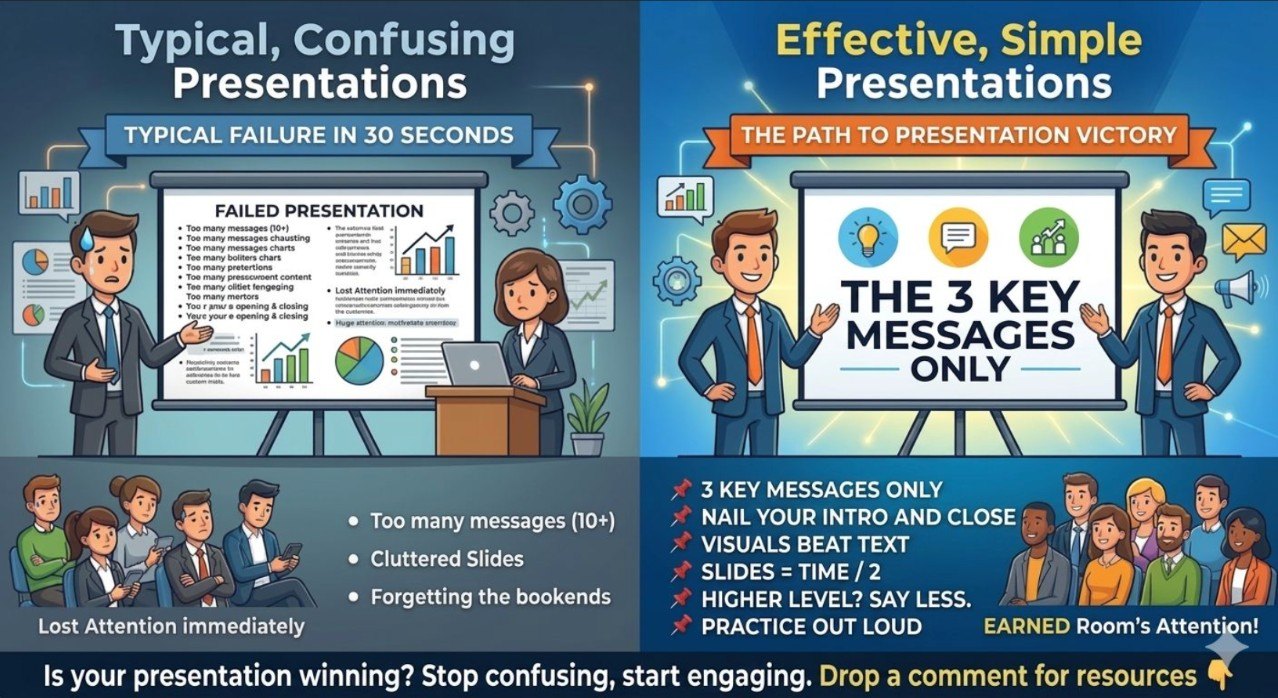
Not because the content is bad. Because the opening didn’t earn the room.
Most presentations fail in the first 30 seconds. Here is what years of presenting at every level has taught us.
- Three key messages only. If your audience walks away remembering three things, you won. Ruthlessly cut everything else, and keep to two or three takeaways per slide.
- Your intro and close are everything. The audience is hooked at the start, and what they remember most is how you closed. Make both count. The middle will take care of itself.
- Visuals beat text. Less is more on slides. The moment a wall of text goes on screen, people start reading instead of listening. Clean visuals, minimal words.
- Slide count: your time divided by two. Take the minutes you have to present and divide by two. A 20-minute talk gets 10 slides.
- The higher up you present, the less you say. Senior audiences want clarity, not comprehensiveness. Get to the point faster than you are comfortable with.
- Practice out loud, not in your head. Your brain lies to you about how ready you are. Your mouth does not. Use speaker notes as a safety net, not a script.
Presentation skills are both an art and a science, and the best presenters never stop refining their craft. For Customer Success and Service Delivery leaders, it matters most when the audience is the executive table.
Finally, remember that you are the presentation, not the slides. They are only the background that helps you deliver your message.
What is the best presentation advice you have ever received?
Take the first step.
If this sounds like your organization, a 30-minute conversation is a good place to begin.
Book a consultation