
Aviation, Technology and the Integration Gap
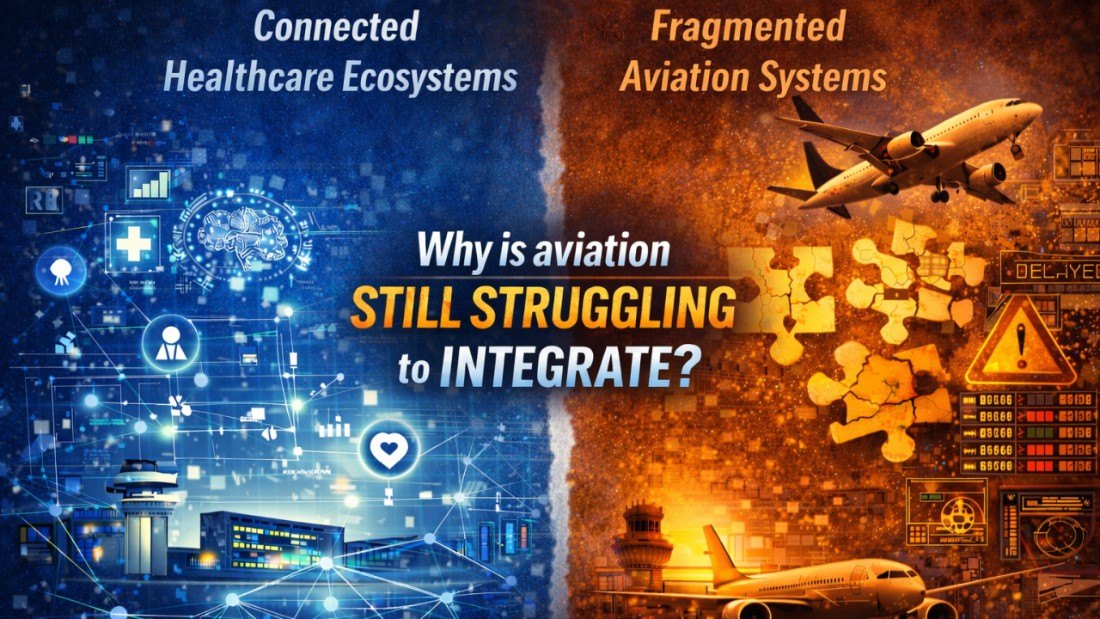
Airlines don’t need more tools. They need connected ecosystems.
In 2023, our founder attended an aviation safety conference in Paris. Two words kept coming up again and again from both operators and solution providers: innovation and integration.
Innovation is everywhere in aviation today: AI, predictive analytics, digital flight operations, real-time data platforms. The energy across vendors and airlines is undeniable.
But here is what stuck with us:
Why is integration still such a challenge in aviation?
When you compare this to healthcare, the contrast is striking. In healthcare, a single hospital ecosystem can include dozens of vendors, all interconnected through:
- Shared patient identifiers
- APIs and interoperability standards
- Structured data exchange (HL7, FHIR, etc.)
Healthcare still faces integration challenges, but despite its complexity, integration is not optional. It is a must.
Now look at aviation. We have:
- Often fewer vendors in a given operation
- Highly specialized solutions
- Increasing demand for data-driven operations
Yet integration across systems, flight ops, crew ops, maintenance, safety and analytics often remains fragmented. Why? Is it:
- Protection of IP?
- Legacy systems?
- Lack of standardized frameworks?
- Competitive positioning?
Our perspective: airlines don’t need more tools. They need connected ecosystems. The real value unlock comes when:
- Systems talk to each other seamlessly
- Data flows across the operation in real time
- Insights are shared across departments, not siloed
The future isn’t just best-in-class solutions. It is best-in-class integration across the ecosystem.
Practical lessons aviation can borrow:
- Agree common identifiers and data standards early.
- Treat interfaces as part of the product, not an afterthought.
- Make integration a requirement when selecting vendors.
Related service: Service Delivery Design. The operating model that carries a signed deal to a customer who is getting value.